


What Is Sơn Ta? Its Origins and Characteristics
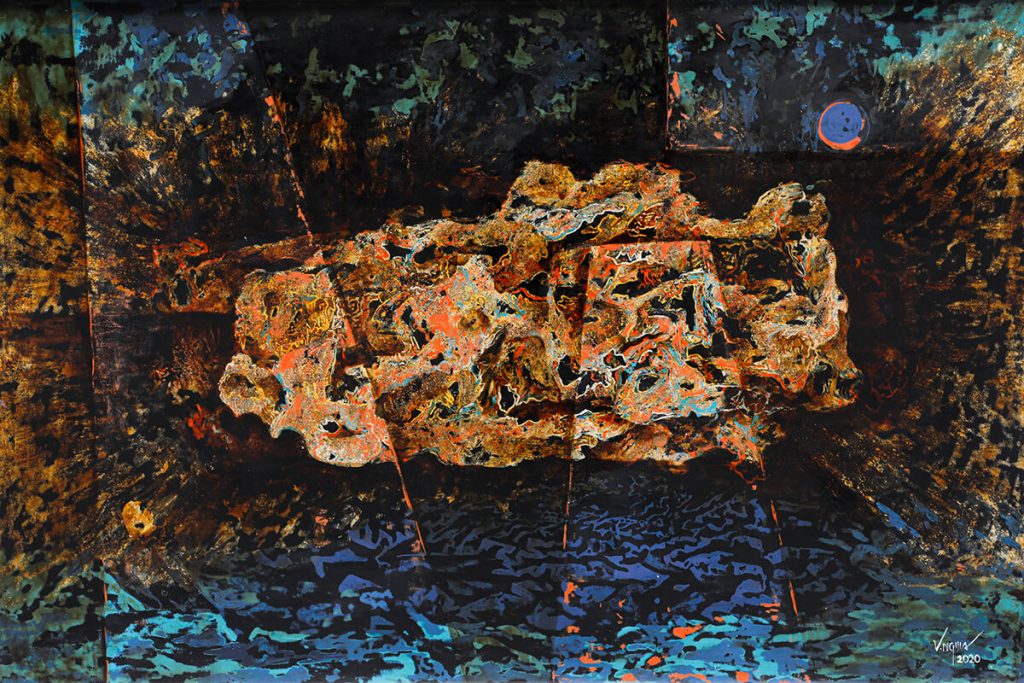
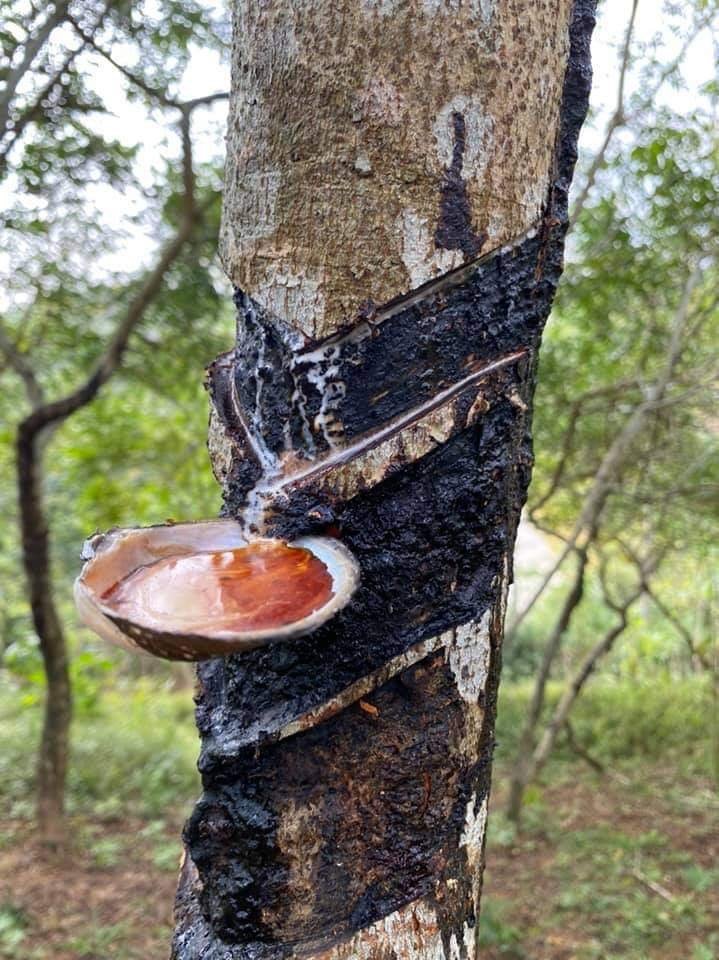
What is sơn ta? This is a question that often arises when exploring Vietnamese lacquer art. Sơn ta is a traditional natural lacquer obtained from the sap of the lacquer tree, scientifically known as Toxicodendron succedaneum. For hundreds of years, Vietnamese people have used lacquer sap in traditional crafts to protect and decorate objects, particularly wooden objects, religious and ceremonial items, handicrafts, and traditional household objects. Over time, this material gradually moved beyond the realm of craftsmanship to become one of the important materials in Vietnamese fine art.
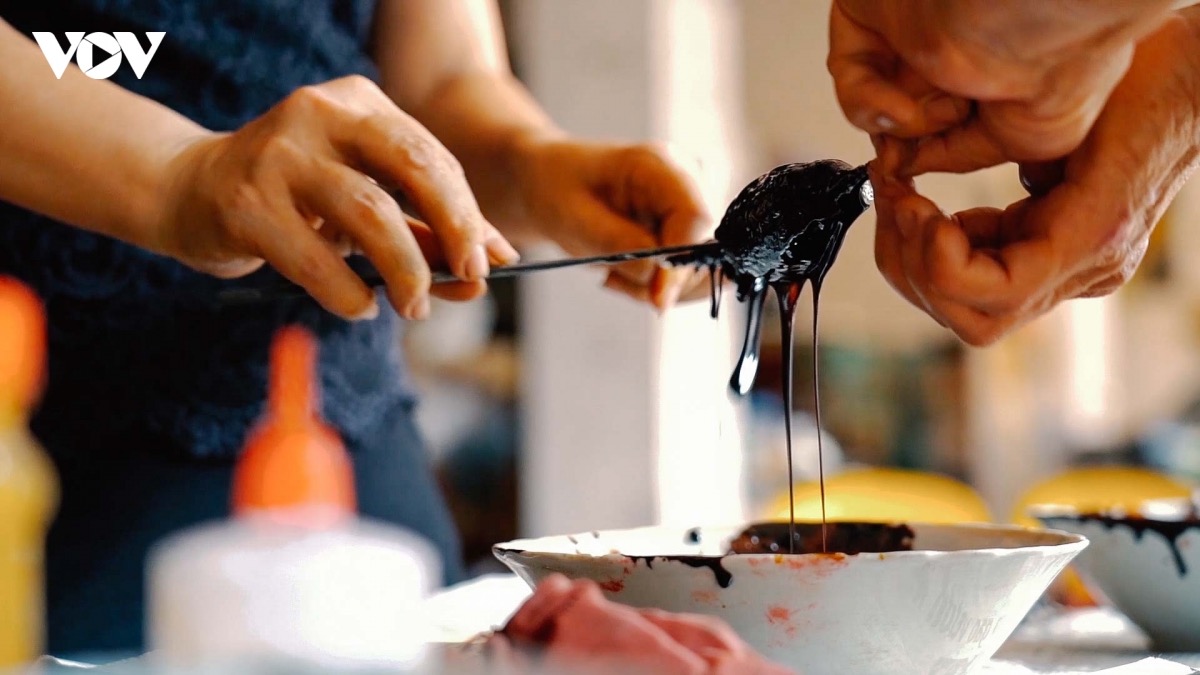
Lacquer sap is harvested by making cuts into the trunk of the tree to collect the resin that flows out. After harvesting, the sap is filtered and processed through several stages before it can be used. It is a natural material with very distinctive characteristics, from its gloss and durability to its ability to create depth on a surface. Sơn ta can also produce different colors and effects depending on how it is processed, the number of lacquer layers applied, and the techniques used by the artisan. For this reason, working with sơn ta requires considerable experience and patience.
One notable characteristic of sơn ta is that it does not simply create an ordinary coating. When used in Vietnamese lacquer paintings, sơn ta can be applied in multiple layers and combined with materials such as gold, silver, eggshell, cinnabar, and other pigments. The surface is then sanded and polished so that each underlying layer gradually emerges. This process creates the distinctive depth, gloss, and light effects that are characteristic of lacquer paintings.
Sơn Ta in Vietnamese Lacquer Painting
Sơn ta plays a particularly important role in the formation and development of Vietnamese lacquer painting. If sơn ta is the foundational material, lacquer techniques are the methods that allow artists to make the most of the beauty and potential of this material. Unlike conventional painting methods, a lacquer artist usually has to construct an artwork through multiple layers of materials. Each layer may have a different color, material, or function and is processed according to a specific sequence.
An artwork may begin with preparing the surface, followed by applying lacquer, incorporating gold or silver, attaching eggshell, creating areas of color, and then applying additional layers of lacquer over the surface. Once the artwork reaches the appropriate stage, the artist begins sanding the surface. This is a decisive stage in determining the final appearance of the lacquer painting. As the surface is sanded, the layers beneath gradually emerge, creating effects that viewers cannot see at the beginning of the process.
What is fascinating is that a lacquer artist creates the artwork both by adding material and by removing material. An area of color may be completely covered and then appear only partially after sanding. Gold and silver may remain hidden beneath layers of dark lacquer. Pieces of eggshell embedded in the surface may become areas of light after the sanding process. Therefore, the beauty of a lacquer painting lies not only in what is visible but also in the layers of material that have been concealed.
This process also explains why lacquer paintings often create a strong sense of depth. The surface is not completely flat in terms of visual perception. Viewers can sense multiple layers within the artwork, even when they are not actually separated like independent physical layers. As the light changes, the colors and reflective qualities of the surface can also change.
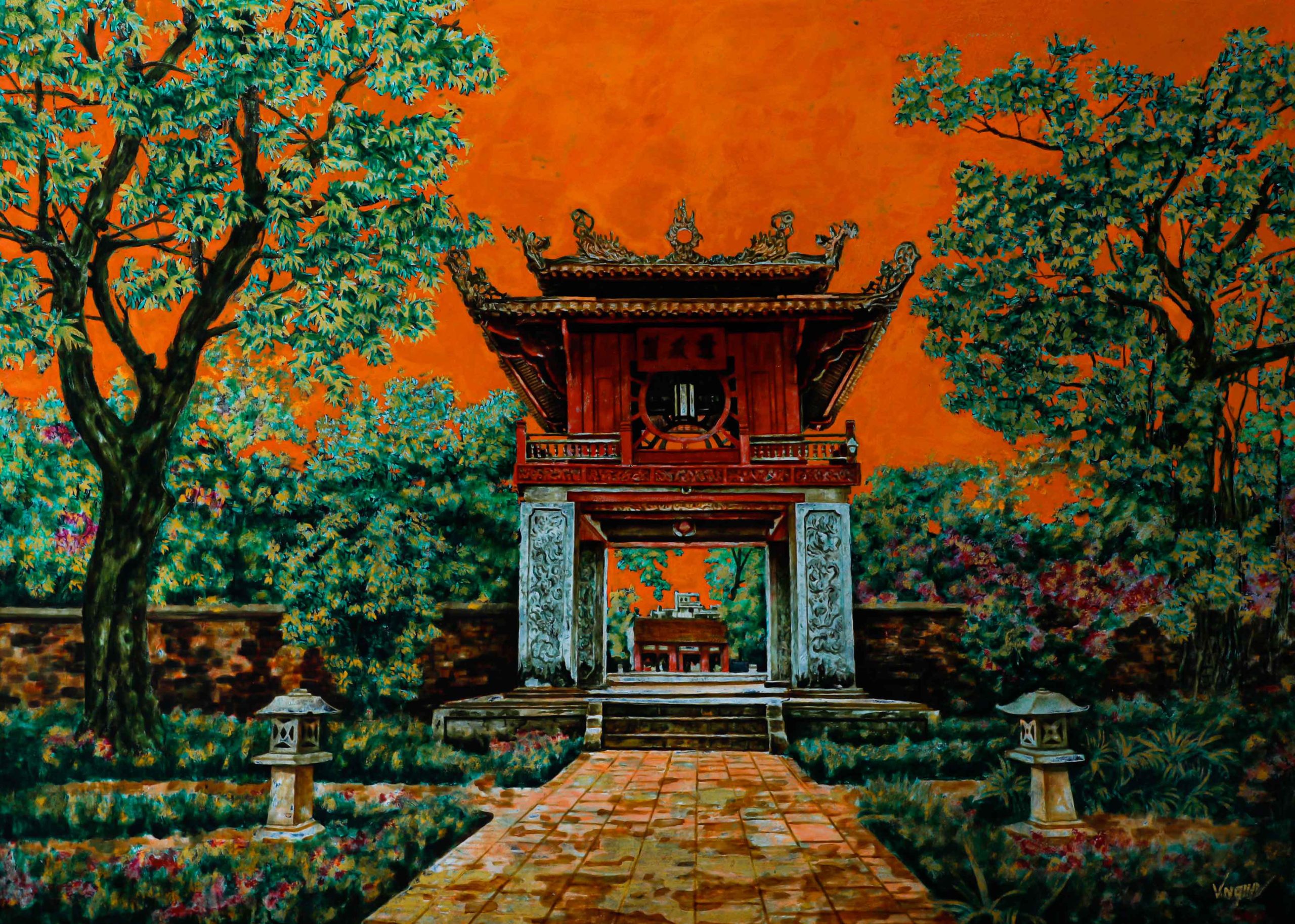
In the history of modern Vietnamese art, sơn ta became particularly important when artists in the early 20th century began looking for ways to bring this traditional material into the language of modern painting. The combination of traditional lacquer techniques, indigenous materials, and new approaches to artistic form opened a distinctive direction for Vietnamese lacquer art.
Among the notable artists associated with this development, Nguyễn Gia Trí is often mentioned as one of the artists who made important contributions to the development of modern lacquer painting. He explored the ability of gold, silver, eggshell, and lacquer to create light, depth, and space, demonstrating that sơn ta could become a medium of artistic expression rather than simply a decorative material.
From this point onward, Vietnamese lacquer painting gradually developed its own distinctive aesthetic language. Deep black, vermilion red, gold, and tortoiseshell brown, together with glossy, deep, and richly layered effects, became characteristics commonly associated with Vietnamese lacquer art. However, the essence of lacquer does not lie only in its color palette. It also lies in the method of working with the material.
Sơn Ta Today: From Tradition to Contemporary Art
In contemporary art, the story of sơn ta does not end with preserving a traditional technique. Young and contemporary artists continue to raise new questions about the possibilities of this material. While sơn ta was once commonly associated with landscape paintings, elegant women, rural villages, and other iconic images of Vietnam, artists today can use lacquer to create abstract works, explore form, express personal memories, or reflect changes in modern society.
What is particularly noteworthy is that a contemporary lacquer artwork does not necessarily have to take the same form as traditional lacquer paintings. Sơn ta can appear in reliefs, sculptures, art objects, or installations. Techniques originally developed for a flat surface can be brought into three-dimensional space, significantly expanding the expressive possibilities of the material.
This change demonstrates that Vietnamese lacquer art does not necessarily have to choose between tradition and modernity. On the contrary, traditional techniques can become the foundation for new experiments. Artists can retain the processes of layering, sanding, and polishing while completely changing the subject matter, form, or space in which the work is presented. In this way, sơn ta can maintain its connection to history while also engaging with contemporary art.
Another aspect that makes sơn ta particularly special in contemporary art is its relationship with time. While digital images can be created and reproduced within only a few seconds, a lacquer artwork requires time to complete. The lacquer needs to dry, the layers need to be built step by step, and the surface has to go through repeated processes of sanding and polishing. What viewers ultimately see is the result of a long process.
It is precisely this slowness that makes sơn ta particularly noteworthy in the modern art world. A lacquer surface still retains traces of the human hand, the material itself, and the process of craftsmanship. No two sanding processes are exactly the same, and the layers of material underneath cannot be seen immediately from the beginning. Each artwork therefore carries its own history.


 Connect via WhatsApp
 Request Consultation